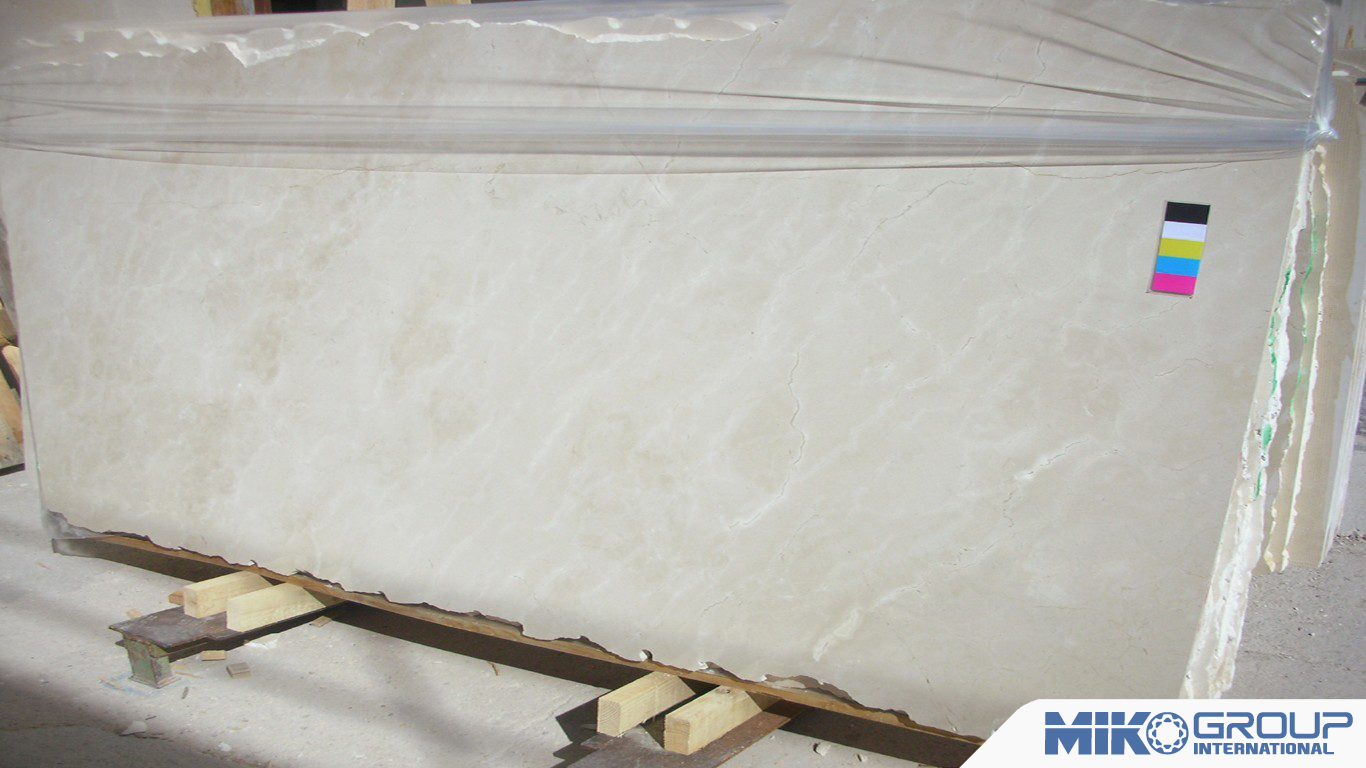
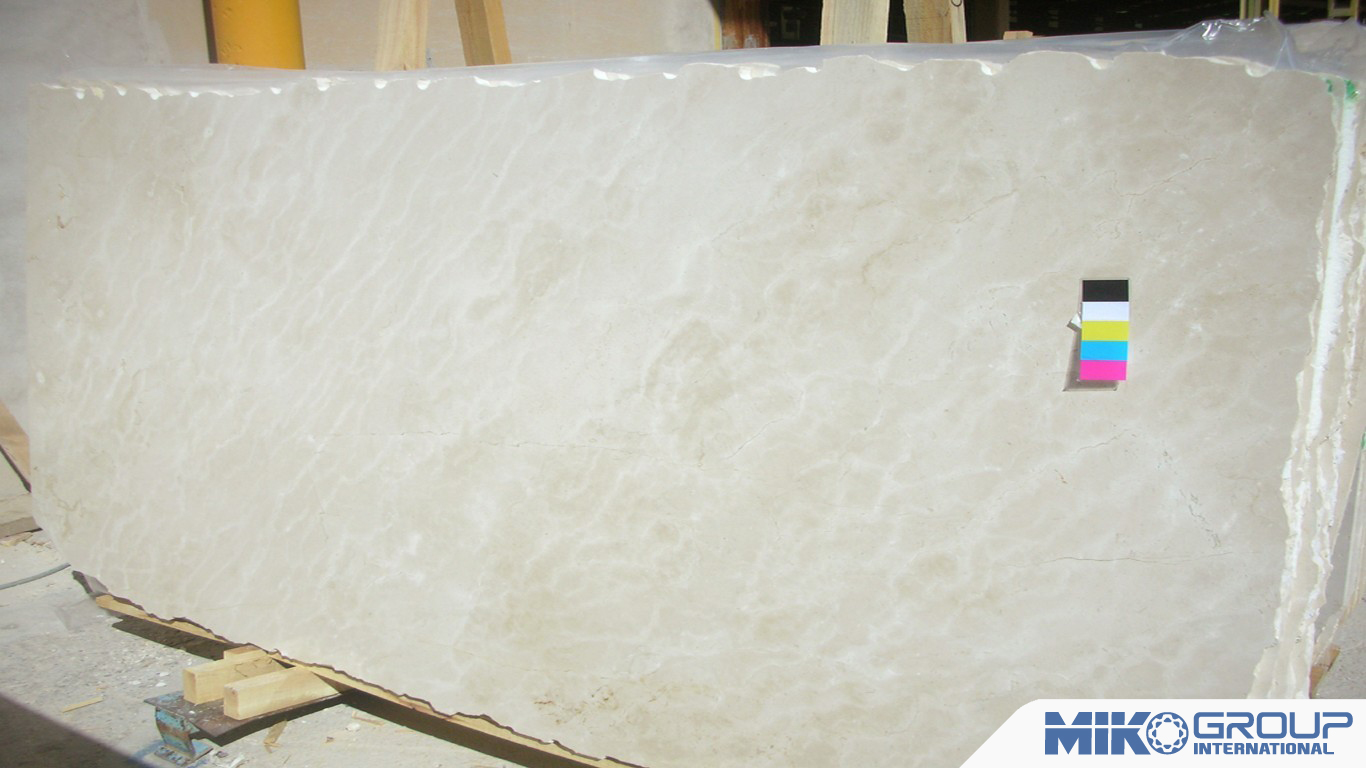
Crema Marfil Marbles

Crema Marfil Marbles
Materials
This marble is a compact type of rock formed from limestone rocks, subjected to high temperatures and pressures reached a high degree of crystallization. The basic component of this marble is calcium carbonate, whose content exceeds 90%.
Mineral Composition: Calcita, fossil remains. Dolomita, Opaques. Microscopic Description: Rock formed by fossil remains, off and on filling of micrite, with an sparitic matrix.
Crema Marfil is one of the younger commercial marble in the market and the first important work in which it was used, was the Supreme Court of Washington (1928). Today Crema Marfil marble is the largest global production.

Volumetric weight:
2,70 grs/cm3
Coefficient of absorption:
0,16%
Porosity:
0,1%
Compression strength:
683 kg/cm2
Flexure strength:
94 kg/cm2
C.Strength After Freezing Test:
691 kg/cm2
Friction wear resistance:
5,2 mm
Impact strength:
37,5 cm
Knoop microhardness:
181 kg/mm2
Recommendations:
Deterioration and discoloration due to moisture by capillary action amounting bringing dissolved salts and materials. Solved with a waterproof layer that prevents water by capillary rise.
We can see 2 thickness tiles with several cracks and breaks with loss of material. The main cause of this weakness is the low resistance to impact and bending. Solved with more thick tiles or greater care.

GUIDANCE TABLE
INTERIOR
THICKNESS
FINISHED
COATING
min. 1cm
Polished
FLOORING
min. 2cm
Polished
STAIR
min. 2,5cm
Polished
WORKTOP
min. 2,5cm
Polished
EXTERIOR
THICKNESS
FINISHED
COATING
min. 2cm
Sawing
FLOORING
min. 3cm
Acid washed
SILL
min. 2,5cm
Polished
DOORWAY
min. 3cm
Polished
The most decisive of a material for coating, is its own weight (density) which will determine the allocation system. Likewise, in the lower area is also determining the impact resistance.
In the paving is particularly important chemistry (especially indoors), impact resistance and wear resistance.
The same goes for the stairs, and add a new requirement, resistance to bending as the placement of the pieces. Moreover, we must distinguish between placement on the outside and inside. The place abroad poses new requirements for resistance to thermal shock and frost and therefore absorption.
In addition, we must not only consider whether their use is outdoors or indoors, but the kind of environment that we're going to find. There are outdoor environments contaminated or near the sea. In the first case will become more relevant chemical resistance of the material. In the second, resistance to salt attack.
If the use will be indoors, there may be wetlands due to the presence of groundwater, water leaks, etc. In this case you must take into account the water absorption, capillarity and resistance to salt water contained in the material.
But there are features that must be taken into account regardless of their use, which are those related to the durability and appearance of the material.
Given all these conditions we recommend the use of material, so as to present a proper appearance at all times to stay put and have a longer life.
In addition to the features that are influenced by the use, you must take into account the thickness required in each case to prevent a deterioration of the material breaks, unable to withstand an impact, compression or bending.